
The Game That Knows No Borders
By George Lahoud
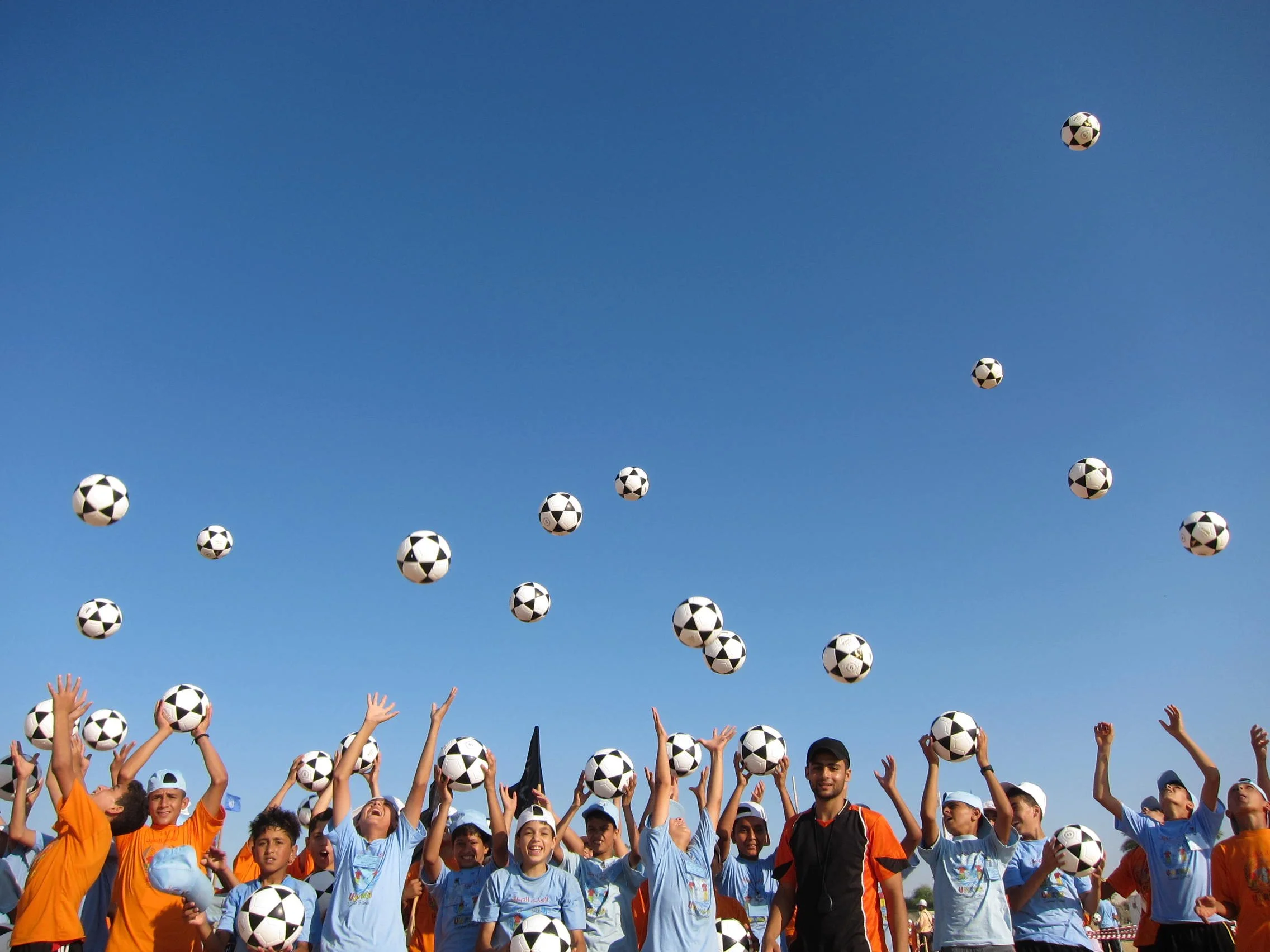
Whether called soccer or football, the beautiful game belongs to the world, and for Palestine refugees, this is no exception. Walking through the streets of the occupied Palestinian territory, whether that be the streets of Ramallah or the rubble in Gaza, soccer is everywhere. It is by far the most popular sport in the world, and as the World Cup came to a close, the suspense of who would be the next world champion engulfed Palestinian communities, just as it did across the globe. But for Palestine refugees, enjoying the world's game comes with challenges unique to those living under military occupation. These challenges appear from the local level all the way up to the highest stage of football on the national team.
With every aspect of life under threat in Gaza after more than two years of what experts know to be a genocide, the ability to play football is not spared. Since October 2023, 90% of the sports infrastructure in Gaza has been destroyed by Israel, with 265 sports facilities impacted.
The athletes themselves are not spared either. According to the Palestinian Olympic Committee, over 1,000 Palestinian athletes and sports workers have been killed in Gaza since October 2023. The devastating toll includes more than 560 footballers, coaches, and referees. Just last month, Palestinian goalkeeper Salim Khader Al-Ashqar was killed by Israeli fire while trying to secure a cooking gas cylinder for his family in southern Gaza. Attacks on football are not limited to Gaza. In the occupied West Bank, Israeli authorities issued orders to demolish the football pitch in UNRWA’s Aida refugee camp, threatening a vital play space for hundreds of Palestinian children.
With this being the reality of Palestinian soccer, it is hard to imagine a future where the Gaza Strip and West Bank Premier Leagues, the top-two division leagues, are able to resume play after being forced to halt all games in 2023. It is clear that Palestinian football, just like many aspects of Palestinian society, is being attacked with impunity. Yet, we continue to witness the Palestinian people remain steadfast through the most difficult challenges, and this is no exception.
Despite their hardships at home, the Palestinian national team has fought against all odds, with Gaza as the endless motivation to succeed on the soccer pitch. In 2024, Palestine shocked the world when they reached the round of 16 of the AFC Asian Cup, losing against Qatar. Their momentum did not stop here. They went on an impressive World Cup qualifying run, only missing out on qualification by two wins, as Oman narrowly defeated Palestine with a last minute penalty. This monumental run in both World Cup qualifiers and the AFC Asian Cup gave the Palestinian people hope amidst all the chaos, something incredibly rare in the last few years.
It's clear that football is an integral part of Palestinian society that needs to be protected and celebrated. This is precisely why UNRWA's work extends far beyond providing food, shelter, and healthcare. For hundreds of thousands of children in Gaza, preserving childhood is just as important as meeting their physical needs.
Through psychosocial support programs, UNRWA creates opportunities for children to learn, play, and heal from the immense trauma they have experienced.
Recreational activities, including football, are a critical part of that recovery, helping children build friendships, regain confidence, and experience moments of normalcy amid extraordinary circumstances. Thanks to generous donors like you, UNRWA USA has been able to help fund UNRWA’s mental health programs for children in Gaza, making UNRWA USA the largest donor to UNRWA’s psychosocial support services.
UNRWA's support for Palestinian sports and soccer does not end there. For decades, the Agency has recognized the important role that sport plays in the physical, mental, and social development of Palestine refugee children. In 2010, UNRWA partnered with Qatar's successful 2022 World Cup bid through its Generation Amazing initiative to inaugurate a FIFA-standard football pitch in the Yarmouk Refugee Camp in Damascus, Syria, home to the largest population of Palestine refugees in the country. The project transformed what had been a facility available for only a few hours each week into a modern pitch accessible around the clock, giving more than 30,000 young Palestine refugees a safe place to play, build friendships, and develop life skills through football.
As the FIFA World Cup comes to a close and the world celebrates its new champion, we ask that you don't forget the millions of Palestine refugees whose own journey continues long after the final whistle.
Across the Gaza Strip, the occupied West Bank (including East Jerusalem), Jordan, Lebanon, and Syria, UNRWA works to provide education, healthcare, relief, and opportunities for children to simply be children. In Gaza, where countless children have endured unimaginable loss, displacement, and trauma, that support also includes psychosocial programs and recreational activities like football that help restore a sense of normalcy, hope, and healing. The World Cup has ended, but the challenges facing Palestine refugees have not. By supporting UNRWA USA, you can help ensure that when the world's attention moves on, Palestinian children, especially those in Gaza, are not forgotten.
To ensure that the attention does not move away from Palestine refugees during this difficult time, you can support UNRWA’s USA ‘Your Gift is a Goal for Gaza’ Campaign! You can get your own Palestinian designed Jersey by signing up as a monthly Solidarity Sustainer starting today until July 31, 2026, or purchasing it on our shop here. Every purchase directly supports the UNRWA programs that provide education, psychosocial support, and emergency relief for Palestine refugees in Gaza.
Sustain unrwa’s life-saving work today
If this story touched you and you are able, make a gift to UNRWA USA. And if you can’t give today, share these stories.
